MG Windsor EV Car: Price, Features and Specification
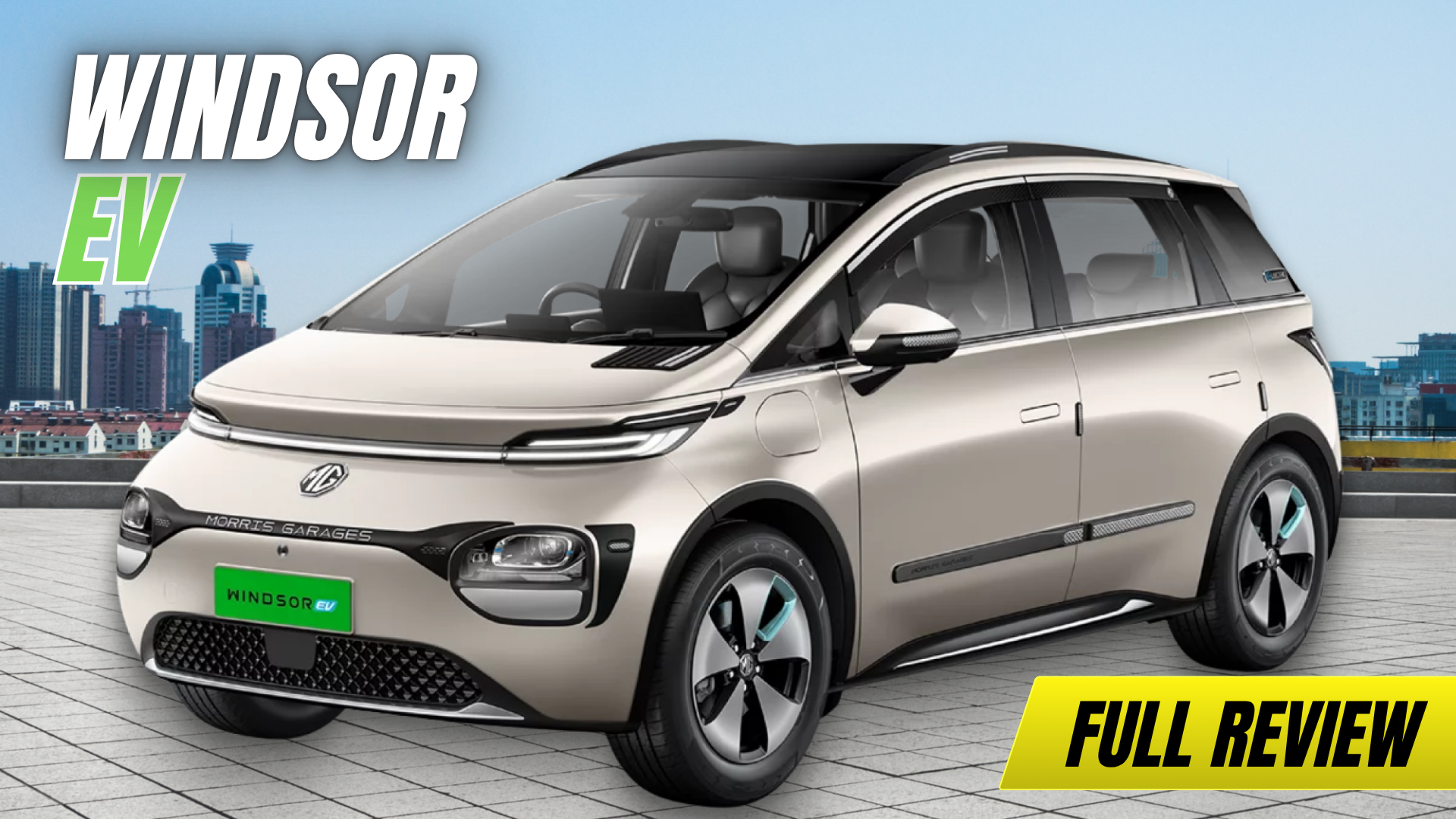
The MG Windsor EV Car is a newly launched electric crossover (CUV) from MG Motor India. It debuted in September 2024 as MG’s third EV after the Comet EV and ZS EV. The Windsor EV sports a unique “Aeroglide” design language with an MPV-like profile (about 4.3 m long and 2,700 mm wheelbase) and aims to offer the space of a family sedan with SUV versatility. Priced aggressively (under ₹20 lakh ex-showroom), it has quickly become a top seller – reaching about 27,000 sales in 8 months and even topping India’s EV sales charts for several months. The car now also offers a new “Windsor EV Pro” variant (launched May 2025) with a larger battery and extra features.
MG Windsor EV Car Design
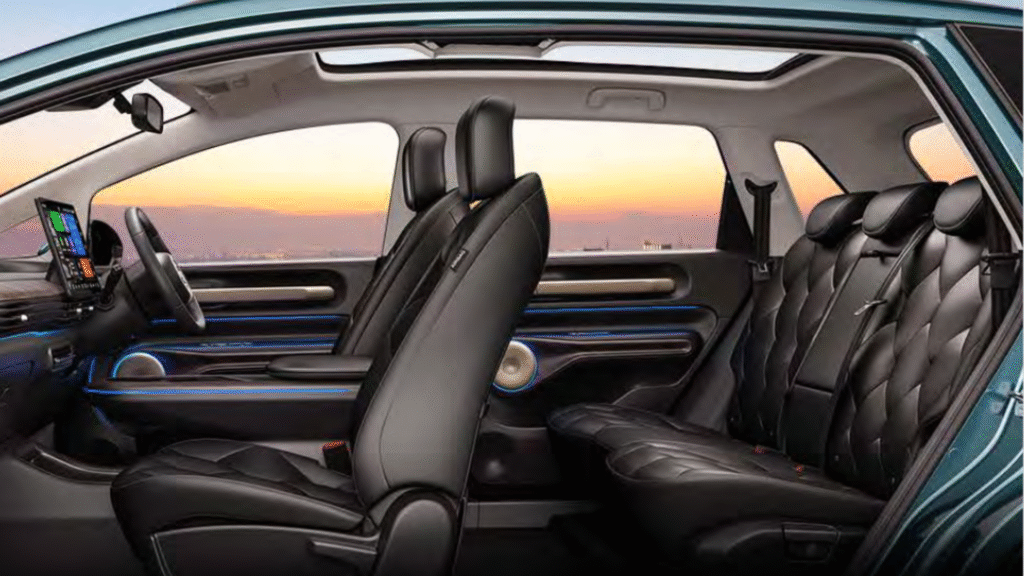
The MG Windsor EV car exterior combines crossover and MPV cues. It has a tall, boxy silhouette with large glass areas and an 18-inch wheel design. Up front are connected LED light bars with LED headlights below, and at the rear a single LED strip joins the tail lamps. The door handles are flush-fitting, and the whole look is meant to be futuristic – MG calls it AeroGlide styling. The design remains largely unchanged for the Pro version, apart from new alloy wheel designs and a few color and trim tweaks. A standout feature is the fixed panoramic glass roof (an “Infinity View” roof) – the first of its kind in a mass-market Indian car. This roof adds to the airy cabin feel but does not open like a conventional sunroof.
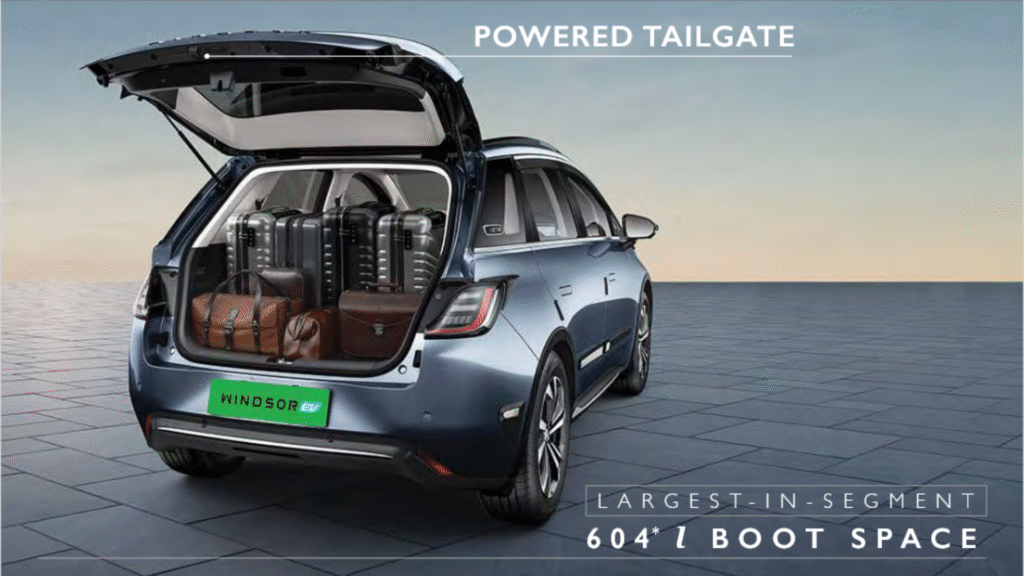
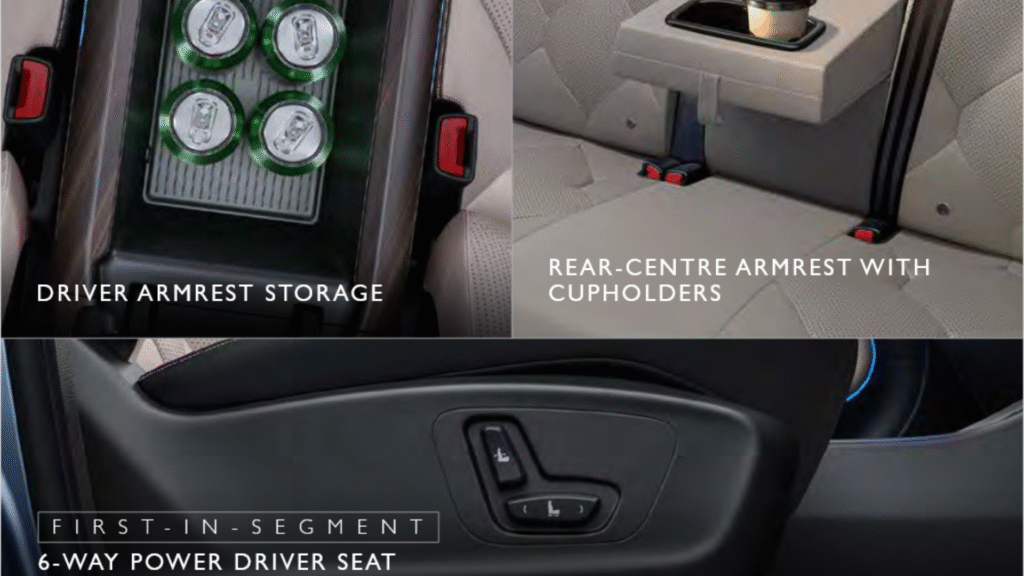
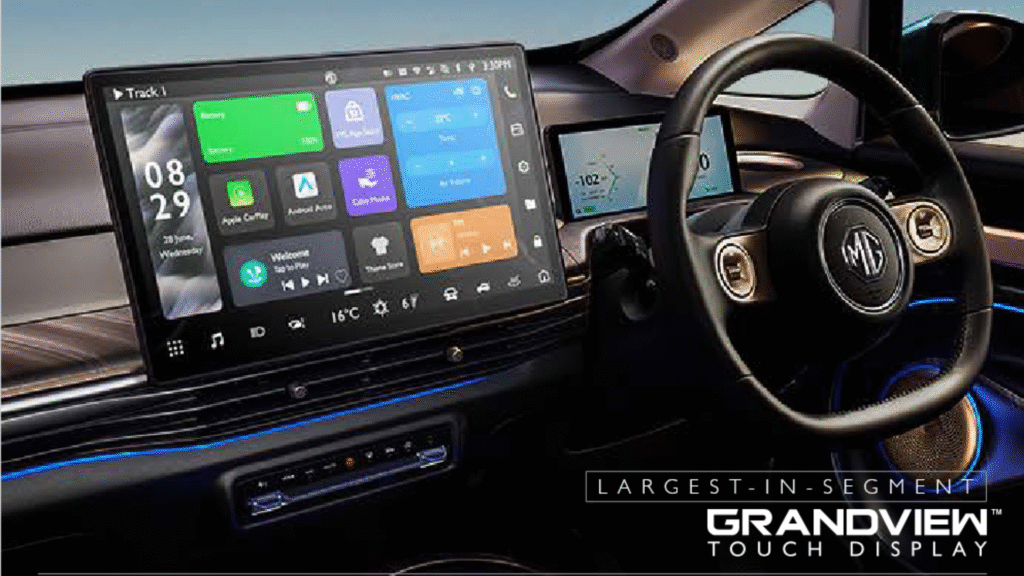
Inside, the Windsor EV has a very modern, minimalist layout. The dashboard is dominated by a large 15.6-inch floating touchscreen (for infotainment and vehicle controls) and a fully digital instrument display (about 8.8 inches). There are few physical buttons or switches. The interior color theme is mostly black, with walnut wood and bronze-colored trim on the dash (Pro variant gains a dual-tone ivory/beige option). Seats are upholstered in textured faux leather; the front seats are ventilated and the rear seats are a three-passenger bench with a centre armrest. Notably, each rear seat has a full three-point seatbelt, and the rear seats can recline by up to 135° – making them very comfortable for long rides. Overall, the cabin is spacious, with good headroom and 604 L of boot space (more than many rivals).
Performance and Range
Under the hood (front axle) is an electric motor making about 134–136 hp (100 kW) and 200 Nm of torque. Power is sent to the front wheels. The standard Windsor EV uses a 38 kWh lithium-iron-phosphate (LFP) battery pack, which MG rates for about 331–332 km of range (ARAI cycle) on a single charge. In real-world driving, owners report around 240–300 km of usable range per charge.
The new Windsor EV Pro upgrade adds a 52.9 kWh LFP battery, boosting the claimed range to about 449 km (ARAI). (Another source calls it 50.6 kWh and 460 km CLTC range, which is roughly consistent.) The motor’s power and torque stay the same on the Pro. The car supports standard AC charging (with a 7.4 kW onboard charger) and DC fast charging. Using AC home charging, the larger battery takes around 9.5 hours to charge from empty to 100%. With public DC charging (up to 60–70 kW), the battery can go from about 20% to 80% in roughly 50–55 minutes. The Windsor EV also features multiple driving modes and regenerative braking settings to help maximize range.
Features and Technology
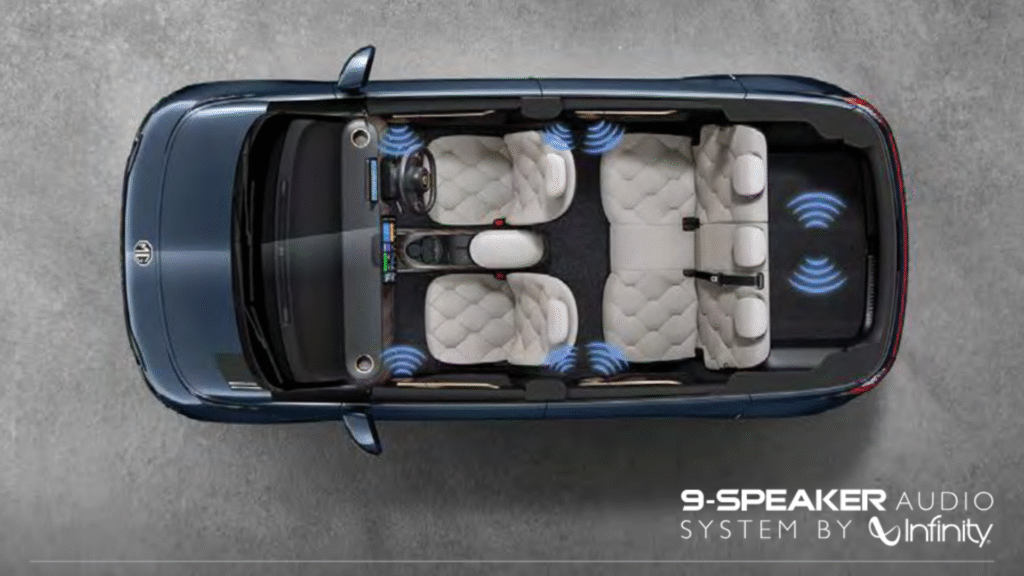
The Windsor EV is well-equipped with modern tech and comfort features. Its centerpiece is the 15.6-inch central touchscreen, which runs MG’s iSmart infotainment system (with navigation, smartphone mirroring, voice control and over-the-air updates). Other convenience features include a 9-speaker Infinity premium audio system, wireless phone charging, and automatic dual-zone climate control. Ambient interior lighting (256 colors) adds a premium feel. The car has ventilated front seats and rear AC vents for passenger comfort. The powered tailgate (on top trims) and a spacious glovebox and storage bins add practicality.
Safety and driver-assist technology are also strong points. Even the standard model includes features like six airbags (dual front, side and curtain), ABS with EBD, Electronic Stability Control (ESC) and Hill-Hold Control. There are rear parking sensors with guidelines, ISOFIX child-seat anchors and a tyre-pressure monitoring system (TPMS) for convenience and safety. Higher trims (especially the Pro variant) add a full Level-2 ADAS suite. This includes Autonomous Emergency Braking (AEB), Forward Collision Warning (FCW), Lane Keep Assist/Warning (LKA/LDW), Adaptive Cruise Control (ACC), Blind-Spot Detection, Driver Attention Alert, and Adaptive High-Beam Assist. A 360° surround-view camera and an electronic parking brake with auto-hold are also offered on top variants. These features – particularly ADAS – are uncommon in this price segment. In addition, the Windsor EV has a high-strength steel body and a sealed, protected battery enclosure for crash safety. (Note that official crash-test ratings are not yet available, but analysts praise its strong structural design.)
Battery and Charging Flexibility
An innovative option with the Windsor EV is MG’s Battery-as-a-Service (BaaS) scheme. Buyers can choose to lease the battery instead of buying it outright, which lowers the upfront cost. For example, MG’s site lists the base Excite model at ₹9.99 lakh (ex-showroom) plus a battery rental fee of ₹3.9 per km driven. With battery included, the same model costs around ₹12–14 lakh (ex-showroom) depending on state. In practice, most buyers opt to buy the battery, paying about ₹12–18 lakh for the car (see Pricing below). The battery comes with a lifetime warranty from MG, providing extra peace of mind.
Another modern tech feature is “Vehicle-to-Load/Vehicle-to-Vehicle” (V2L/V2V) capability, available on the Windsor EV Pro. This allows the car to power external devices (e.g. appliances) or even charge another EV, using its high-voltage battery. This makes the Windsor EV more versatile for emergencies or outdoor use.
Also read | MG Comet EV Car: Price, Features and Specification
Safety
Safety is a key focus of the Windsor EV. As noted, it comes with a comprehensive list of protective features. Key standard safety elements include:
- Six airbags: dual front, side and curtain airbags protect all passengers.
- ABS with EBD and ESC: prevents wheel lock-up and skidding under hard braking.
- Hill-Start Assist: prevents rollback on slopes.
- Rear parking sensors and camera: aided parking and reversing.
- ISOFIX child anchors: for secure child-seat installation.
- Tyre Pressure Monitoring (TPMS): alerts if a tyre is underinflated.
- Auto door locks: doors lock above a certain speed and unlock on impact.
Advanced safety (Level-2 ADAS) features on the Pro trim include Autonomous Emergency Braking, Forward Collision Warning, Lane Keep Assist/Warning, Adaptive Cruise Control, and Blind-Spot Monitoring, among others. These systems use cameras and radar to prevent or mitigate accidents, a rarity in this segment. All Windsor EV models use strong LFP battery chemistry, which is thermally stable and less prone to fire risks. Overall, the Windsor EV’s safety gear and build quality suggest it will perform well in crash tests when assessed.
Variants and Pricing
The MG Windsor EV is offered in several variants. As of mid-2025 these include: Excite, Exclusive, Essence (all with the 38 kWh battery), plus Exclusive Pro and Essence Pro (with the 52.9 kWh battery). In major cities, ex-showroom prices range roughly from ₹12.0 lakh for the base Excite to about ₹18.3 lakh for the top Essence Pro. (These figures include the battery; with MG’s battery rental option the cash price can be about ₹3–4 lakh lower.)
In May 2025, MG also introduced an Exclusive Pro mid-variant (between Exclusive and Essence Pro) priced around ₹17.25 lakh. This sits below the top trim but includes the larger battery and many Pro features. MG announced a small price hike for all models starting July 2025 (about 1–1.5%), reflecting input costs.
Competition
In the Indian market, the Windsor EV competes with other compact electric SUVs. Direct rivals include Tata Nexon EV and the new Tata Curvv EV, Mahindra XUV400 EV, and upcoming models like the Hyundai Creta EV. For example, the Curvv EV has a slightly larger 55 kWh battery and longer claimed range (~502 km), but it is also about ₹3–4 lakh more expensive than the Windsor’s top model. The Nexon EV (available with 30 or 40 kWh batteries) and XUV400 (40.5 kWh) offer around 300–460 km range, priced in roughly the same ₹13–18 lakh bracket.
What sets the Windsor apart is its space and features package. Because it is a “born-EV” design (as opposed to a converted ICE model), it makes very efficient use of cabin space – often more than some similarly priced rivals. Its 2.7 m wheelbase is longer than the Nexon’s, for example, giving extra legroom. The first‑of‑segment panoramic glass roof, large infotainment screen, and higher-end tech give it an edge in comfort and gadgetry. In short, the Windsor EV aims to offer a bit more room and equipment for the price. Competitors may beat it on range or performance (the 52.9 kWh Windsor Pro’s 449 km is good but not class-leading), but none match its combination of features, rear-seat comfort and pricing exactly.
Conclusion
The MG Windsor EV delivers a compelling package for Indian EV buyers in 2025. It blends a roomy, high‑tech cabin with decent electric range and fast charging, all at a competitive price. Reviews note it as a “feature-laden” family electric car that outclasses many rivals in packaging. In practical terms, it offers similar power and performance to other B‑segment EVs, while undercutting some on price. Its quick adoption – highlighted by its strong sales and awards – shows there is strong demand for an EV of this kind. For buyers seeking a comfortable, high‑utility electric car under ₹20 lakh, the Windsor EV is a very credible option.